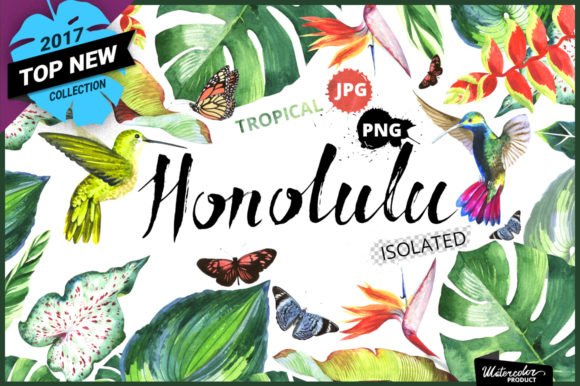
Tropical Clipart Watercolor Illustrations
As a brand designer who has worked with countless small businesses, I always look for design assets that can elevate a local business’s visual presence without overwhelming it. Tropical Clipart Watercolor is one such graphic design asset that offers a fresh, vibrant, and versatile approach to branding, packaging, and promotional materials. Its soft, hand-drawn style instantly evokes a sense of warmth, playfulness, and natural beauty—perfect for businesses looking to stand out in a crowded market.
The Mood and Personality of Tropical Clipart Watercolor
Tropical Clipart Watercolor exudes a friendly, organic, and slightly whimsical vibe. The watercolor technique adds a handmade feel, making it ideal for small business branding that values authenticity and creativity. This illustration style suggests a brand that’s approachable, fun, and connected to nature—making it a great fit for bakeries, coffee shops, handmade soap businesses, and boutique stores.
Its soft edges and pastel tones create a gentle, inviting aesthetic that can work well for both modern and rustic brands. Whether used as a background element or a standalone graphic, it brings a sense of calm and sophistication without being overly bold or aggressive.
Real-World Applications for Local Businesses
When working on a real local business project, like a new line of handmade soaps for a small skincare brand, I found that Tropical Clipart Watercolor was incredibly useful. It added a unique visual identity to product labels, packaging, and social media graphics. The illustrations were easy to integrate into logo design, helping to establish a cohesive brand identity that felt personal and authentic.
This graphic design asset can be used across a wide range of applications. From product labels and packaging design to menu graphics and social media campaign visuals, it offers flexibility and consistency. It works especially well for printable design elements, such as thank-you cards, stickers, and seasonal campaign visuals, where a touch of personality can make a big difference.
For a food business, like a local bakery, the illustrations helped create a more engaging and memorable experience. They were used as decorative accents on menus, as part of a product mockup for online sales, and even as background elements in web design to enhance the overall user experience.
Supporting Business Presentation and Brand Identity
One of the most valuable aspects of Tropical Clipart Watercolor is its ability to support stronger first impressions and better product recognition. When used effectively, it helps create a more professional packaging design that stands out on the shelf. This is especially important for small businesses competing with larger brands.
It also contributes to a clearer visual hierarchy, allowing key information like product names, pricing, and brand messaging to stand out. This is crucial for product labels, where clarity and readability are essential. By using this illustration, a brand can build a more consistent identity that resonates with customers and fosters trust.
Incorporating Tropical Clipart Watercolor into marketing visuals enhances the emotional connection between the brand and its audience. It makes promotional ads, flyers, and posters more engaging, helping to capture attention and drive customer interest.
Where Tropical Clipart Watercolor Shines
This illustration is best suited for product labels, packaging accents, and hero graphics that serve as the centerpiece of a brand’s visual language. It works exceptionally well as a decorative brand element, adding character to everything from hang tags to seasonal packaging.
For a boutique store or a home decor shop, the illustrations bring a sense of charm and uniqueness to the brand’s presentation. They also serve as effective social media campaign graphics, helping to create a cohesive and visually appealing online presence.
When used in product mockups, Tropical Clipart Watercolor allows designers to visualize how a brand will look in real-world settings, making it easier to test and refine the final design before production.
Where to Use It Carefully
While Tropical Clipart Watercolor is highly versatile, there are certain situations where it may not be the best choice. For formal corporate branding, its playful nature might clash with a more serious or minimalist aesthetic. Similarly, it should be avoided on very small labels or crowded product packaging where it could become distracting.
In layouts that include a lot of text, such as ingredient-heavy labels or legal information areas, the illustration should be used sparingly to avoid competing with important details. Low-contrast backgrounds can also make the artwork less visible, so it’s important to test it in different contexts before finalizing the design.
For luxury minimalist brands or designs that require a high level of simplicity, this illustration may add unnecessary complexity. It’s always a good idea to compare it with competitor packaging to ensure it aligns with the brand’s overall vision and positioning.
Practical Designer Notes
Before finalizing any design project, I always recommend testing Tropical Clipart Watercolor on real packaging mockups to see how it looks in physical form. Checking black and white usage is also important, as some illustrations may lose their impact when converted to grayscale.
Previewing the design on small labels ensures that the details remain clear and legible. Testing it with brand colors helps maintain consistency, while comparing it with different font styles—like serif, sans serif, script, or handwritten fonts—can reveal how it interacts with typography.
It’s also essential to confirm commercial licensing before using the asset for client work or physical product sales. Many creative marketplaces offer commercial licenses, but it’s always wise to double-check the terms to avoid any legal issues down the line.
Finally, inspecting PNG transparency and SVG editability ensures that the design can be adapted to different formats and sizes without losing quality. This is particularly important for digital products and web design projects where scalability and flexibility are key.